
How can smart technology transform the student commute on GO Transit?
As a team of three product designers, we explored, scoped, and designed a smarter commuting experience for GO Transit in three weeks.
Research & journey mapping
Uncovering why students miss buses through surveys and mapping key intervention points across the commute.
Flow mapping & feasibility
Exploring different concepts, mapping end-to-end flows, and testing ideas with GO Transit riders.
Product & interaction design
Turning the strongest direction into a focused, testable product experience.
Transit apps tell you when the bus arrives. They do not tell you when to leave.
University students relying on GO Transit frequently miss buses even after checking transit apps. Delays, slow updates, and packed academic schedules make commuting stressful.
Existing transit apps show when a bus is scheduled to arrive, but they don't account for the things that actually affect when someone needs to leave, like traffic, weather, walking time, or their personal schedule.
How can we help students leave at the right time and make their commute more reliable?
Personal context as the core of GO Transit's student experience.
Transit apps already make routes, schedules, and live updates easy to access. The bigger opportunity is to understand the person behind the trip. For students, when to leave depends on more than the bus schedule. It depends on their classes, routines, and what is happening around them.
Personalization
Understand each rider's routines, priorities, and needs instead of treating every trip the same.
Daily relevance
Become useful beyond the moment someone checks a bus schedule, creating a reason to return every day.
Stronger rider loyalty
Build a relationship around helping students get through their day, not just getting them from one place to another.
An AI-powered assistant that adapts to the commute in real time
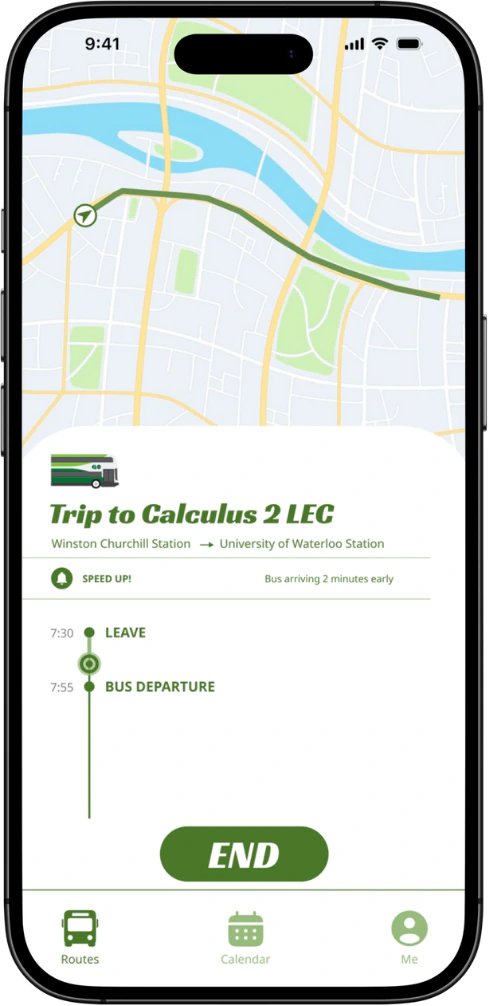
GO Smart is an AI-powered commuting assistant that combines real-world conditions with a student's schedule and habits. Instead of simply displaying a bus schedule, it tells students when to leave and why.
Behavioral learning
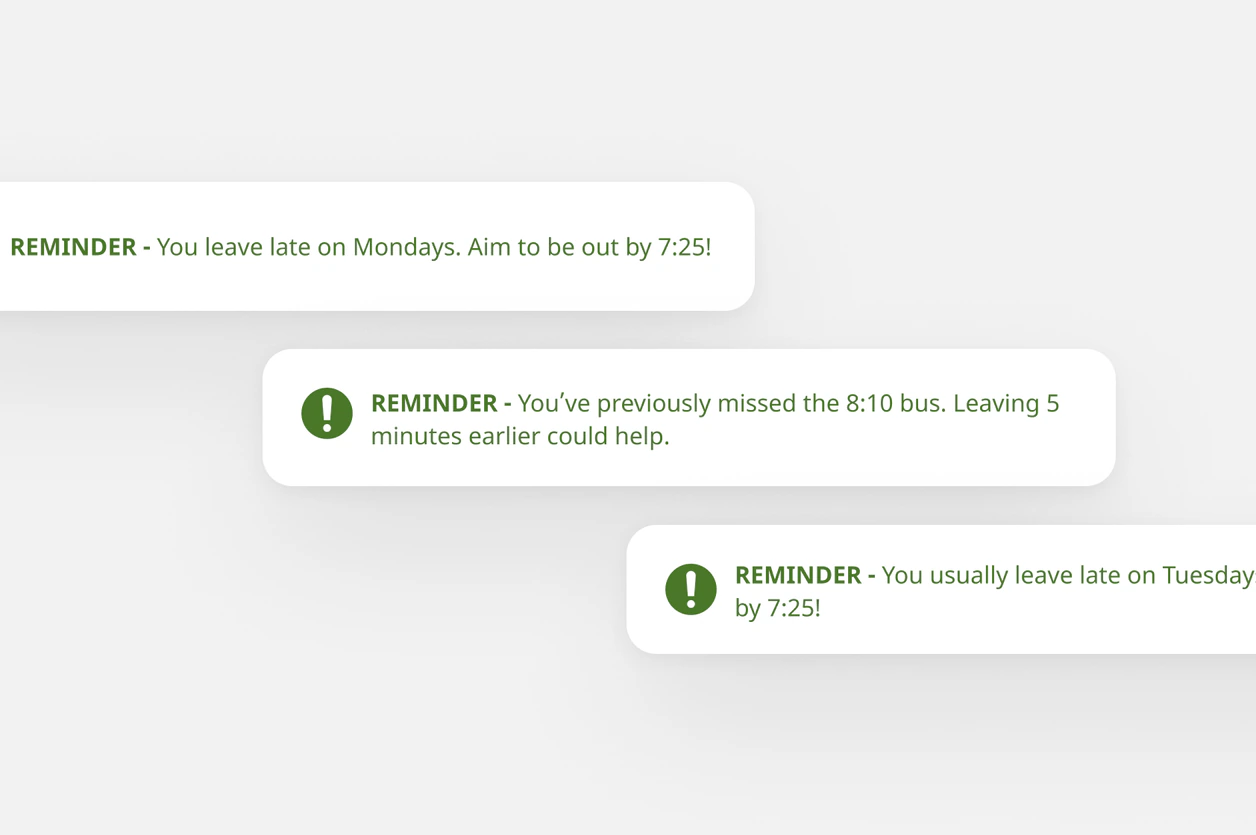
GO Smart learns personal patterns, such as consistently leaving the house five minutes late, and adjusts reminders to help students stay on schedule.
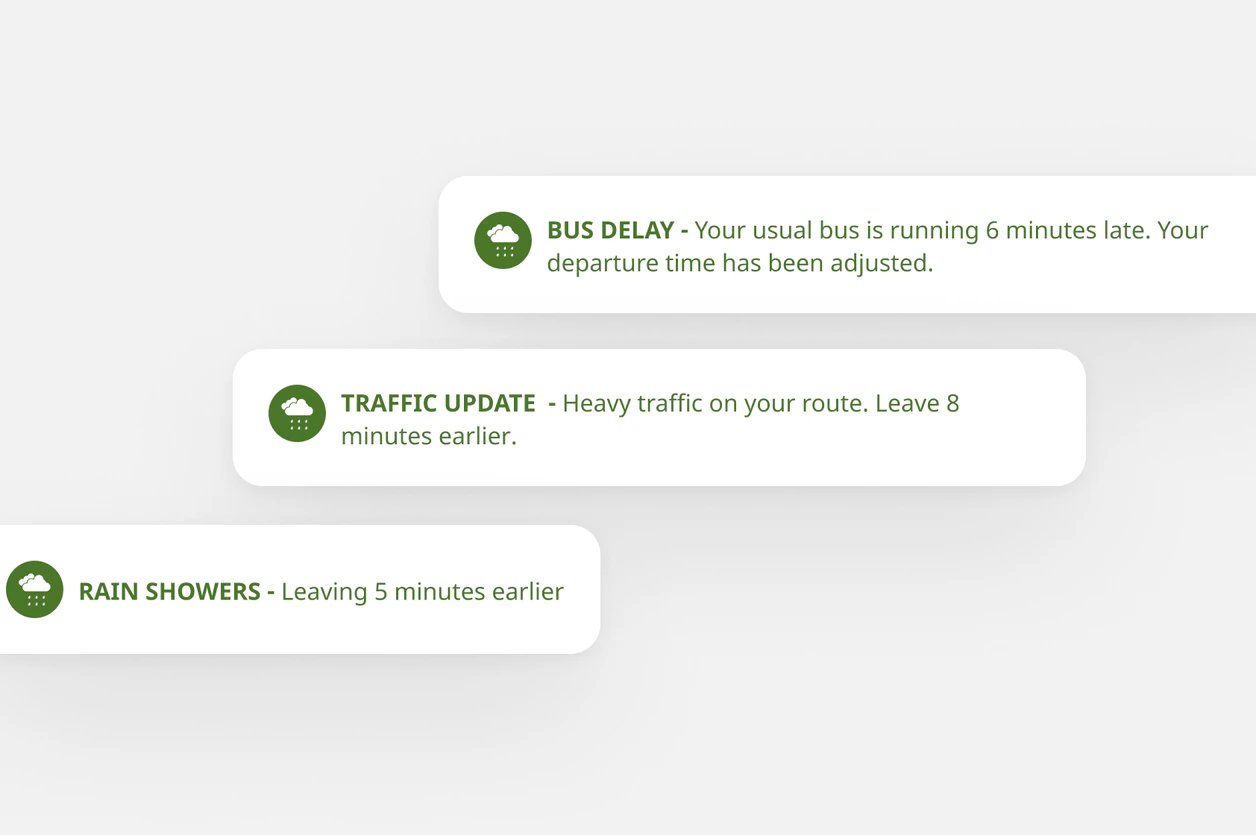
Real-time conditions
Live traffic, weather, and travel modes dynamically update departure times as conditions change.
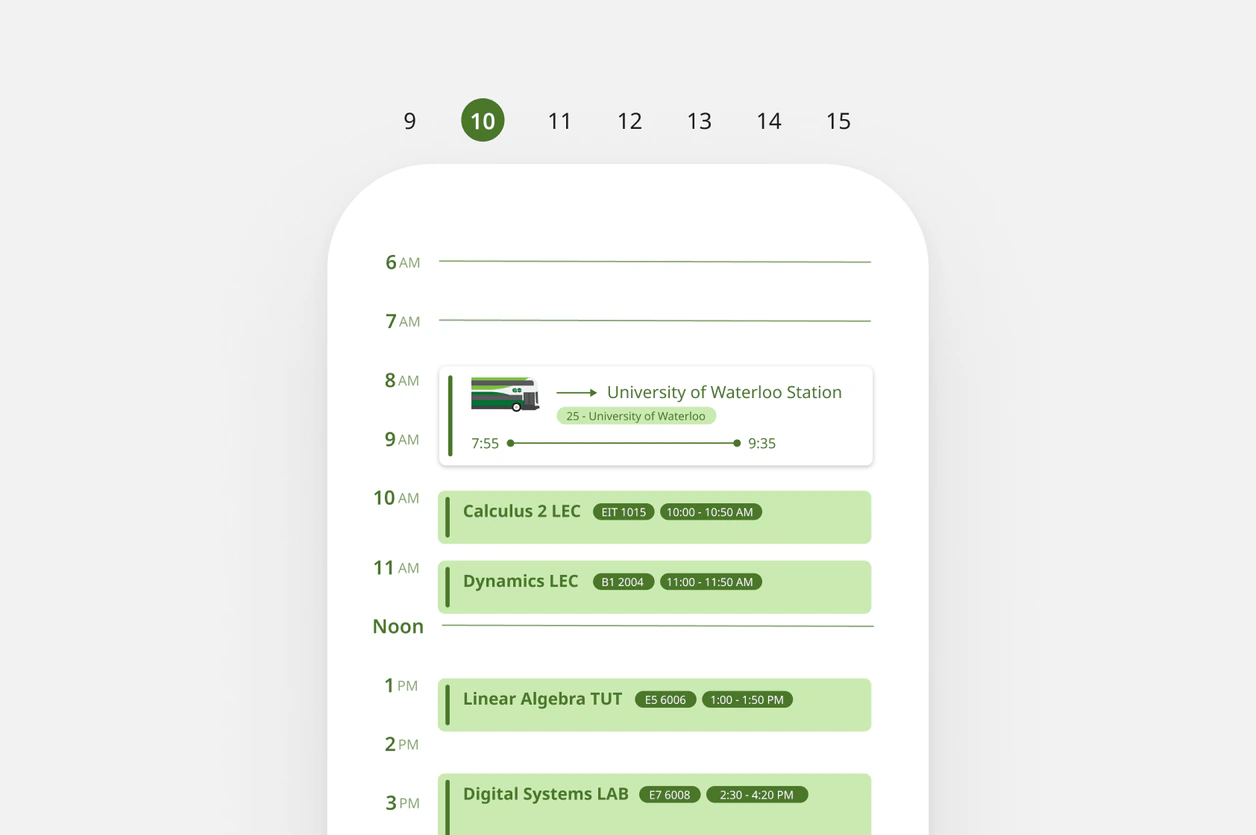
Calendar integration
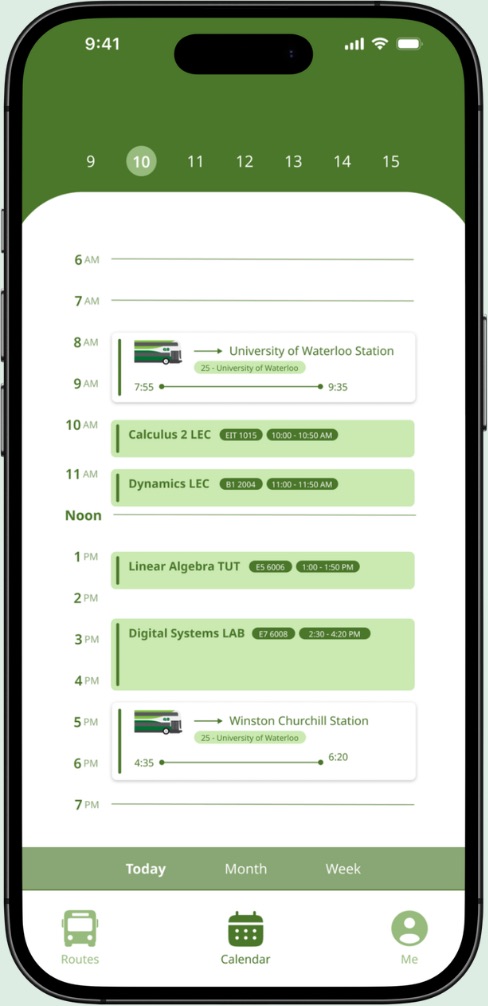
The app connects to class and personal calendars to automatically build a weekly bus plan around a student's schedule.
Knowing when to leave requires too much effort.
Students have to piece together information from their transit app, weather, schedule, and live conditions to figure out when they should leave. Initial discussions with university students helped us uncover 4 key pain points:
Transit updates were sometimes delayed or inaccurate
Students could not always rely on the information shown in the app to reflect what was happening on the road.
Changes were easy to miss
When a bus was running early or late, students often had to actively check the route to know that something had changed.
External conditions affected departure time
Traffic, weather, and walking time could all change how early a student needed to leave, but these factors were not considered together.
Personal schedules made every commute different
Changing classes and other commitments meant students had to figure out their departure time around a different schedule each day.
Journey mapping
We mapped the student commute from planning the trip to boarding the bus to understand where students were spending the most effort and where there was an opportunity to intervene.
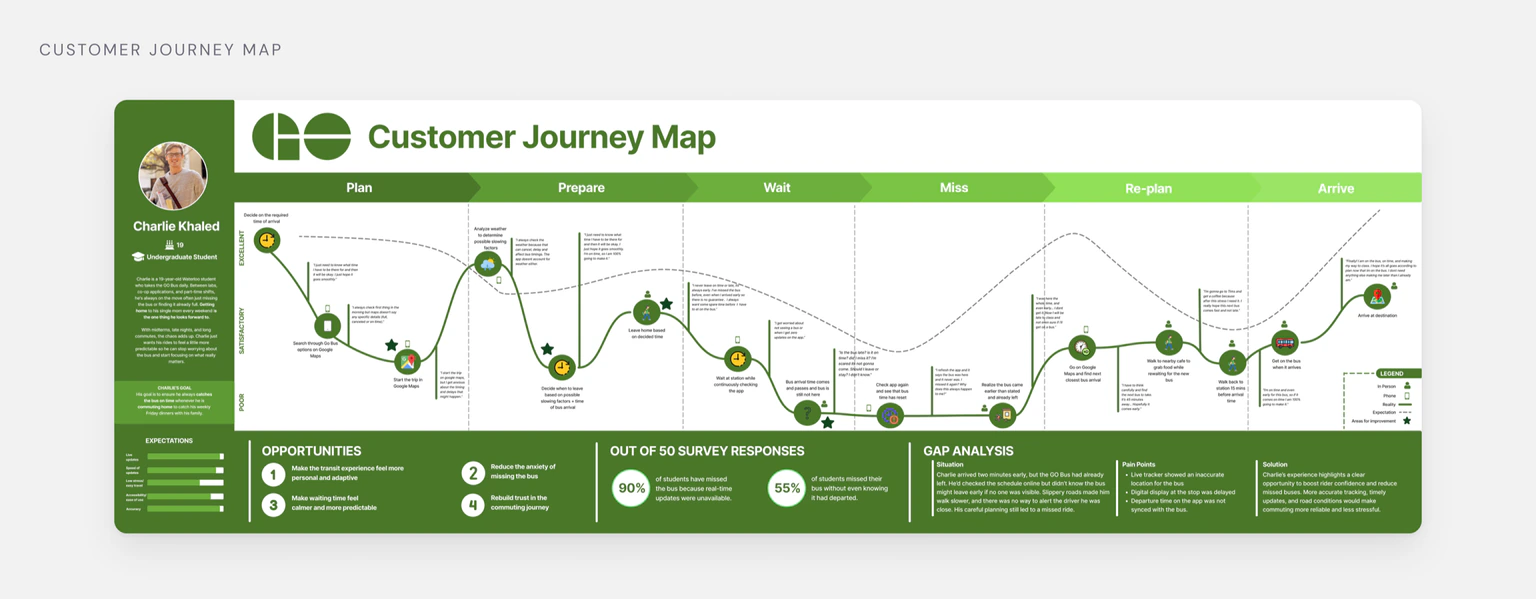
Key Insight: The information students need already exists, but they have to connect it themselves.
A proactive commute experience, built around the student's day.
I mapped the product experience before designing individual screens, making sure the key pieces worked together from planning the week to getting out the door. The core flow connects calendar-based planning, real-time conditions, and departure reminders into one experience.
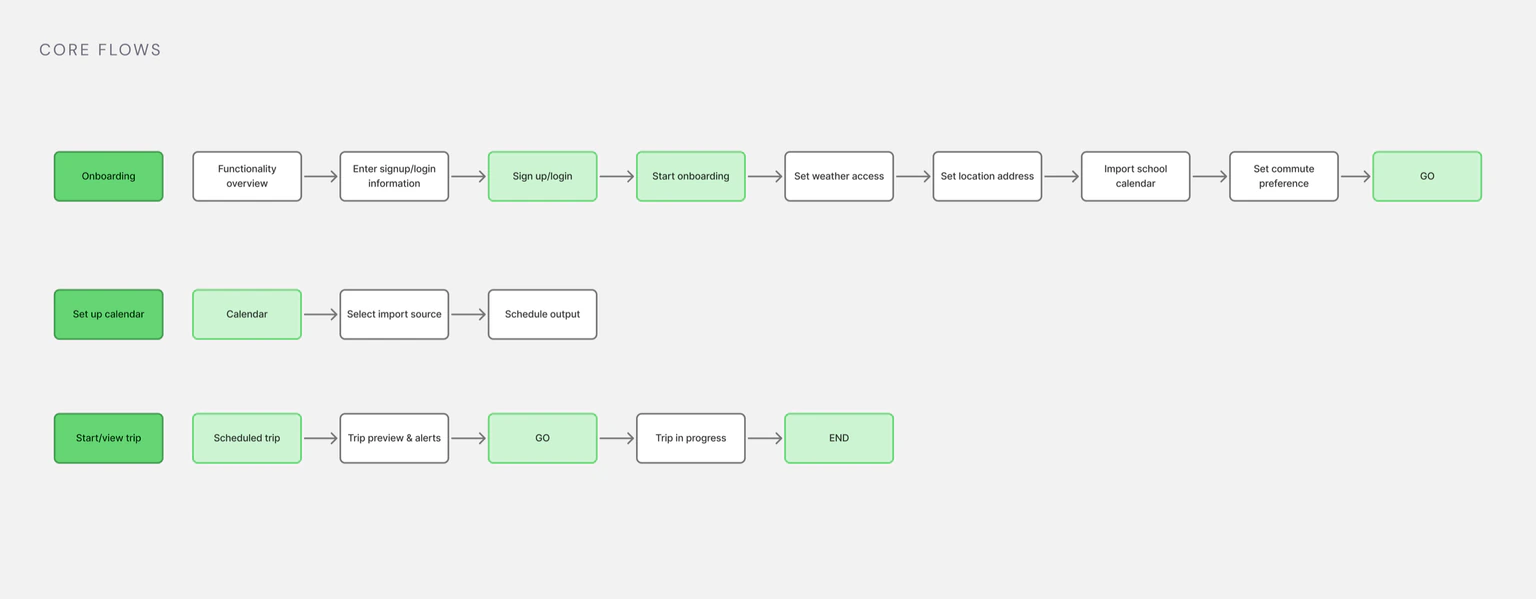
One early concept explored letting riders signal bus drivers when they were running late. While interesting, it introduced too many questions around driver workflows and feasibility. This pushed us to focus on what the passenger could actually control: knowing when to leave. That became the foundation for the final product direction.
We created a commute assistant that tells students when to leave.
The final design plans each week around a student’s class schedule and turns every trip into a clear departure time that updates with live conditions, so students no longer have to work it out themselves.
What I learned
Narrowing the scope made the solution stronger
Research uncovered multiple pain points, but focusing on one high-value problem helped us create a clearer and more focused solution.
Feasibility shaped the final direction
An early concept let riders page bus drivers when they were running late. Reframing the idea around what passengers could control helped us balance design ambition with real-world constraints.
Where I’d take it next
Validate the AI with real-world data
Test departure predictions against traffic, weather, and historical delays to measure accuracy and build trust in the recommendations.
Test with student commuters
Evaluate the experience with regular GO Transit riders to see if departure times, reminders, and changes are clear when they matter most.